
Reads the operating state
Combines oxygen, temperature, current, camera confidence, pellet drift, biomass, and site rules before proposing an action.
See workflowshared cage intelligence
Mythos learns from cages in parallel, understands relationships across behavior, oxygen, biomass, feeding history, and outcomes, then applies mistakes and lessons from one region to the same species operating somewhere else.
New release
Every recommendation is grounded in live signals, local constraints, and the outcomes of previous feeding actions.
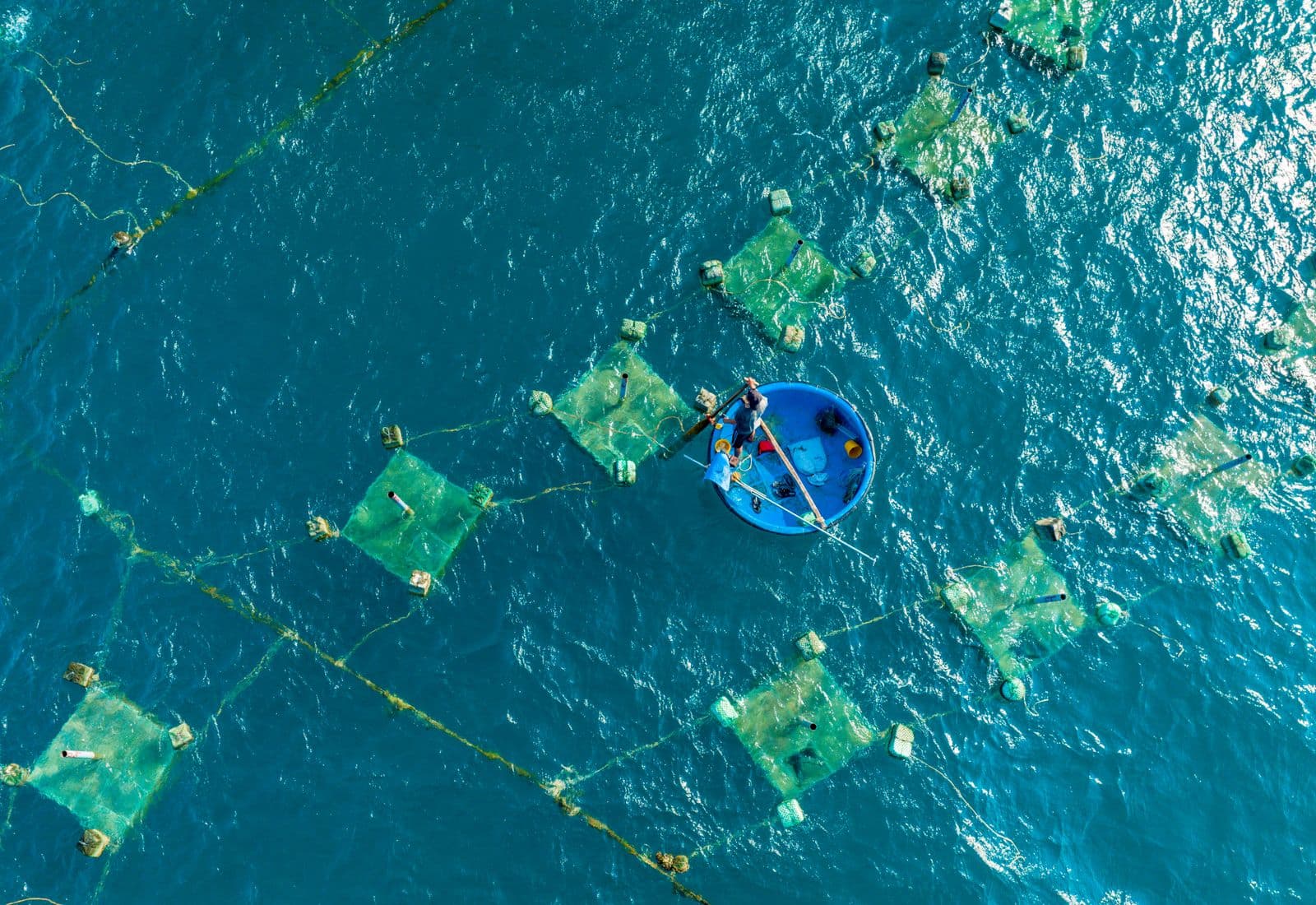
Mythos coordinates the signals that matter before feed is released, then learns from what actually happened in the cage.
Combines oxygen, temperature, current, camera confidence, pellet drift, biomass, and site rules before proposing an action.
See workflow
Applies hard safety checks and human review thresholds before any automated feeding decision reaches the line.
See workflow
Connects feed amount, appetite response, growth, and waste signals back into the next operating window.
See workflow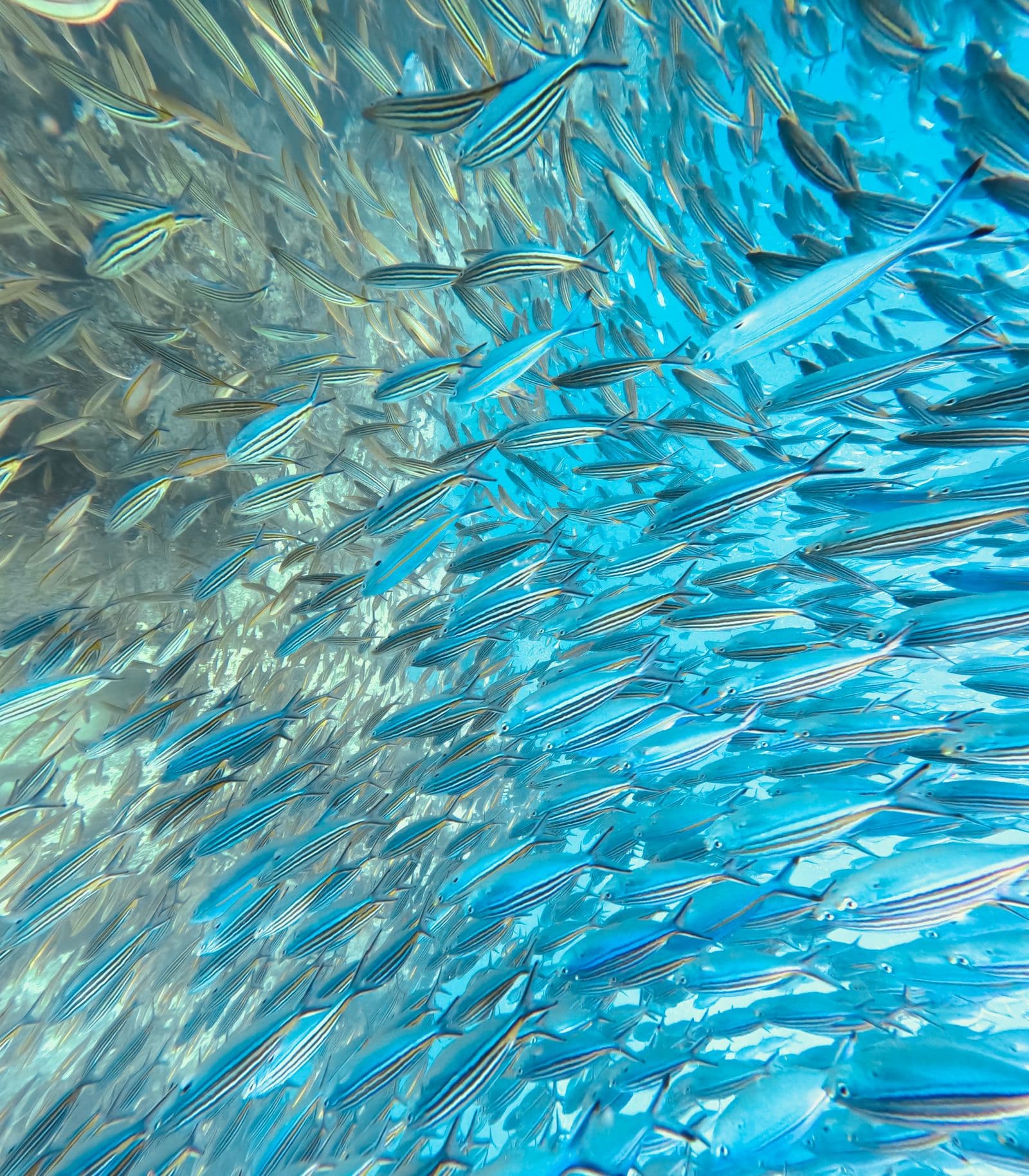
One platform
The agent becomes stronger when Argus Vision supplies behavior inputs and Sim Lab pressure-tests operating scenarios before rollout.
Projected performance
These are modeled targets for Mythos once it is pretrained on reference-farm data and pressure-tested in Sim Lab — what an appetite-aware, guardrailed AI feeding agent is engineered to deliver for the same species and cage class.
1.08
Projected feed conversion ratio1
Modeled against a ~1.25 regional baseline for the same species and cage class — and feed is roughly half of farm OPEX.
14%
Lower feed cost per kg harvested2
Appetite-matched dosing turns avoided over-feeding straight into margin across every feed window.
21%
Less uneaten feed released3
Pellets that would sink past the school are trimmed before they ever leave the feed line.
6%
Faster to harvest weight4
Steadier, appetite-aligned growth shortens the grow-out window for the whole cohort.
92%
Agreement with expert feed calls5
Mythos recommendations vs. senior-operator review on held-out Sim Lab feed windows.
±3%
Biomass band accuracy6
Vision-fed biomass stays inside ±3% of weigh-frame ground truth before any dose is sized.
<800 ms
Decision latency per window7
Live cage state to a guarded recommendation — fast enough to keep pace with every feed pulse.
100%
Feed actions safety-screened8
Every dose clears hard oxygen, current, and policy guardrails before it is allowed to dispatch.
Projected from Sim Lab simulation and cross-farm transfer-learning priors, benchmarked against regional baselines for the species. Pilot validation is in progress — these figures will be replaced with measured farm results as cages come online.
Under the hood
Mythos keeps the feeding loop visible, so supervisors can inspect the reason behind a recommendation before it is applied.

Every recommendation carries the inputs, constraints, confidence, and operator state behind it.

Runs with the farm's own cage data, review workflows, and operating thresholds.
Connects the agent to camera streams, feeding lines, sensor sources, and dashboard review.
01
Pulls camera, water-quality, feed-curve, weather, and cage-history inputs into one operating state.
02
Evaluates pause, light, medium, and heavy feed actions against appetite, oxygen, waste, and performance reward.
03
Flags low-confidence, high-risk, or out-of-policy decisions for operator approval before dispatch.
04
Captures what happened after the feed event so the next recommendation reflects real farm performance.

Try Mythos
Connect with the FeedRight team to map product fit, deployment path, and the data needed for a field-ready pilot.
1.08 projected feed conversion ratio. Modeled economic FCR — feed dispatched ÷ live-weight gain — from Sim Lab's bioenergetic intake-and-growth model for this species and cage class, against a ~1.25 regional baseline. The gain comes from trimming uneaten feed and matching dose to appetite; the remainder reflects the species' biological conversion floor (~1.0), so 1.08 is an engineering target, not a measured grow-out result. ↩
14% lower feed cost per kg harvested. Feed cost per kg tracks economic FCR at a fixed pellet price: 1 − 1.08 ÷ 1.25 ≈ 14%. Assumes the same feed product and price as the baseline and excludes labour, energy, and hardware. Feed is roughly half of farm OPEX in the reference model. ↩
21% less uneaten feed released. Reduction in uneaten-pellet mass per feed window in Sim Lab versus a blind, schedule-based baseline, measured from simulated pellet tracking (pellets sinking past the school before ingestion). This is a waste-mass figure, reported separately from the FCR and feed-cost numbers above. ↩
6% faster to harvest weight. Modeled reduction in days to reach harvest weight for the cohort from steadier, appetite-aligned growth versus the baseline schedule. Sensitive to water temperature, stocking density, and starting-weight assumptions. ↩
92% agreement with expert feed calls. Share of Mythos ration recommendations falling within a senior operator's accept band on held-out Sim Lab feed windows. This measures agreement, not a correctness ceiling — operators commonly over-feed as insurance, so divergence is not necessarily error. ↩
±3% biomass band accuracy. Spread of Argus Vision mean-biomass estimates around weigh-frame ground truth in Sim Lab. Accuracy falls under poor visibility, occlusion, or glare; below a confidence threshold the estimate is routed to operator review rather than used to size a dose. ↩
Under 800 ms decision latency per window. Wall-clock from a complete cage-state window to a guardrail-checked recommendation on reference compute. Excludes camera capture and feeder actuation; live latency depends on site hardware and network. ↩
100% of feed actions safety-screened. Every proposed dose is evaluated against hard oxygen, current, and site-policy guardrails before dispatch — none bypass the screen. This describes the control path, not a guarantee about real-world outcomes. ↩