
Detects appetite behavior
Tracks activity patterns, schooling response, and surface behavior that indicate feeding readiness.
See workflowMeet Argus Vision
Argus Vision converts camera streams into the behavioral signals Mythos needs: appetite, biomass movement, pellet drift, uneaten feed, and confidence.
New release
Argus Vision is the translation layer between raw footage and the input features that drive feeding decisions.
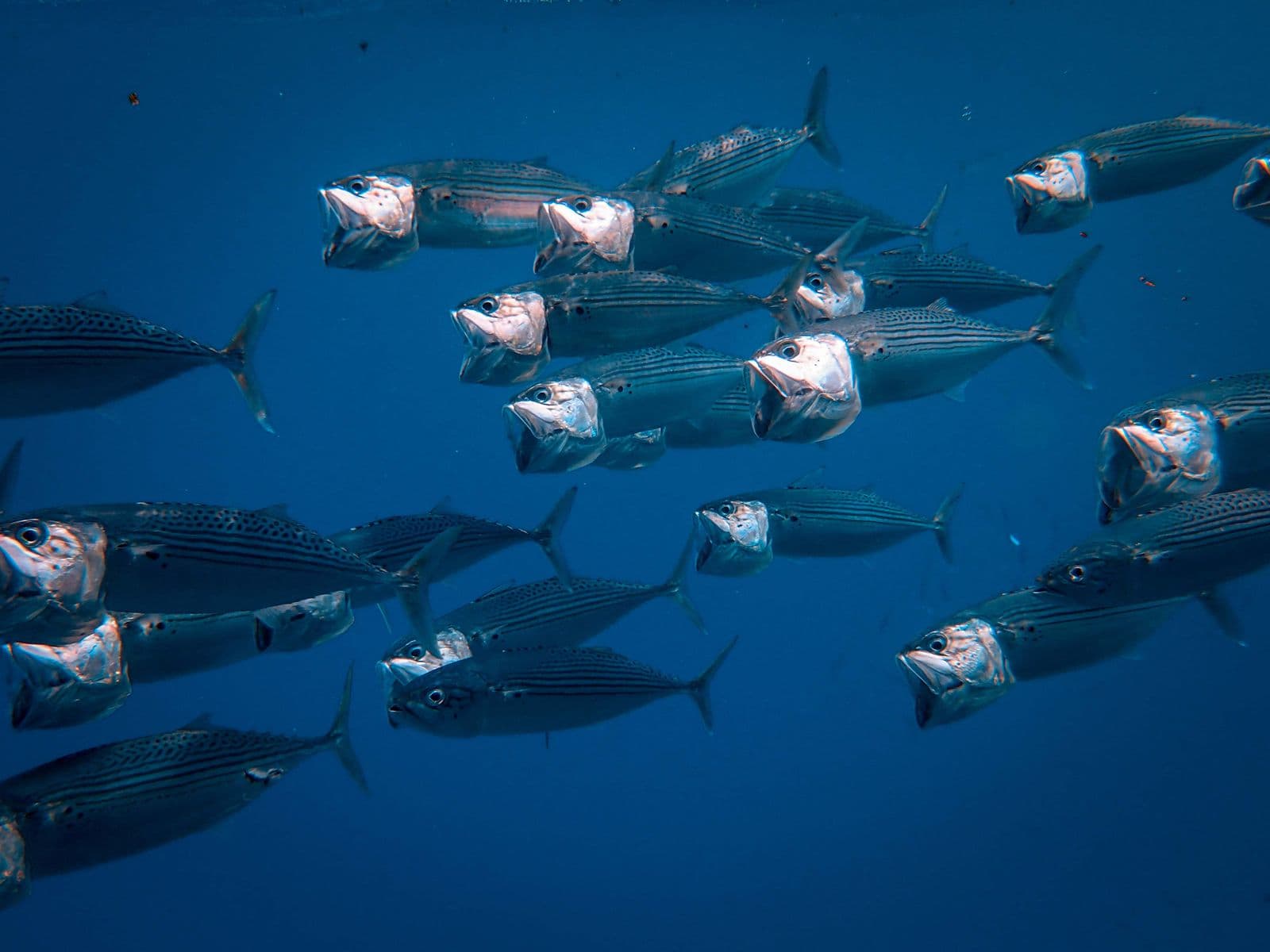
Argus Vision reads the cage state continuously, then packages the right signals for agents, dashboards, and human review.
Tracks activity patterns, schooling response, and surface behavior that indicate feeding readiness.
See workflow
Identifies drift, uneaten pellets, and visibility issues before a feed action is trusted.
See workflow
Produces normalized behavior and confidence features for Mythos, dashboards, and offline analysis.
See workflow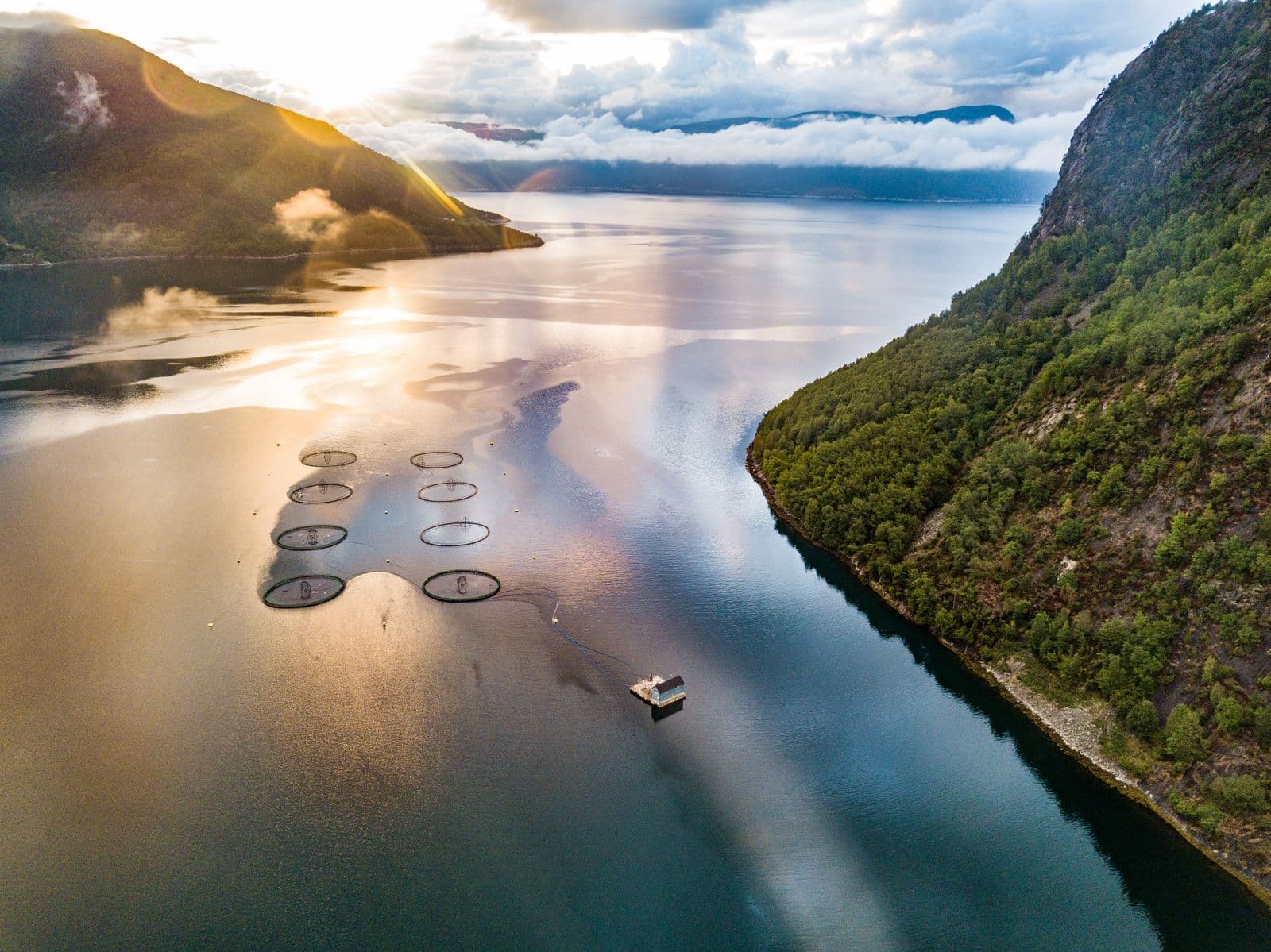
One platform
Its outputs become the behavior layer that Mythos reasons over and the visual ground truth that Sim Lab can replay.
Projected performance
These are modeled targets for Argus Vision once it is trained on Sim Lab's labelled synthetic cage and tuned on reference cage footage — what a confidence-aware vision layer is engineered to deliver for the same species and water before a single dose is sized.
26 / frame
Fish localised every frame1
Argus Vision resolves individual white trevally in dense, low-visibility cage water — per-fish boxes on every frame, not a blurred mass.
1 camera
3D depth from a flat 2D feed2
No stereo rig and no depth sensor — Argus infers how near or far each fish is from the single camera a cage already runs.
100%
Detections depth-ranked3
Every box Argus draws carries a closeness score, so the agent can tell fish at the lens from fish deep in the net.
±3%
Biomass band accuracy4
Per-fish size fused across the feed window into a mean-biomass band tight enough to size a dose against.
±5%
Cage count estimate5
Noisy per-frame detections fused over the window into a stable stocking number a manager can trust.
<2%
Uneaten-feed error6
Argus separates pellets drifting past the school from feeding fish, flagging waste before the next dose is sized.
Day 0
Trained before the first real frame7
Argus arrives pretrained on a Sim Lab digital twin of your cage, species, and water — it isn't starting cold on the first day.
0 blind feeds
Low-visibility frames gated8
When water turns turbid or the lens fouls, Argus drops its confidence and hands the window to a human instead of feeding a bad reading downstream.
Detection density and depth coverage are measured on a real reference cage clip today; biomass, count, and pellet figures are modeled targets from Sim Lab simulation and cross-farm priors, benchmarked against regional baselines. Pilot validation is in progress — these figures will be replaced with measured farm results as cages come online.
Understanding depth
No stereo rig and no depth sensor. Argus Vision runs the cage feed through detection, then ranks every fish from near to far — warm sits closest to the lens, cool is deep in the net. The footage below is a real cage clip, processed by Argus Vision.
Find every fish
Argus Vision localises individual white trevally in dense, low-visibility water — a box on each fish, frame by frame.
Rank it near to far
Argus Vision scores how close each fish is to the lens, shading it warm-near to cool-far — with a live depth map in the corner.
Relative near-to-far ordering inferred per fish — the basis for every depth-ranked detection, from one ordinary 2D camera.
Under the hood
The model is designed to separate useful feeding signals from noise, low visibility, and camera limitations.

Every feature is paired with signal quality so low-visibility footage can be routed to review.
Designed around existing cage video workflows, calibration checks, and operator interpretation.
Feeds clean, structured inputs into Mythos and the wider FeedRight operating layer.
01
Reads underwater and surface footage from the cage environment without changing the farm's operating workflow.
02
Locates fish movement, feeding response, uneaten feed, and pellet drift across the active feed window.
03
Separates strong signals from poor visibility, occlusion, glare, or camera placement problems.
04
Publishes appetite, biomass, pellet, and confidence inputs for Mythos and operator review.

Try Argus Vision
Connect with the FeedRight team to map product fit, deployment path, and the data needed for a field-ready pilot.
26 detections per frame. Measured on a reference cage clip: 22,076 detections across 841 frames (~26 per frame) at confidence 0.4, from Argus Vision's detector trained on a 256-frame labelled set (mAP50 0.47). The single highest-leverage improvement is more labelled frames, which Sim Lab supplies synthetically; this is detection density on representative footage, not a stocking count. ↩
3D depth from a single 2D camera. Argus Vision infers depth directly from one ordinary 2D camera — no stereo rig or depth sensor. The output is a relative near-to-far ordering with no metric scale (metres) unless camera intrinsics are supplied; each fish's depth is sampled over the inner region of its detection box, robust to edge noise. ↩
100% of detections depth-ranked. Every detection in the depth pass is assigned a closeness of 1 − relative distance, on a 0 (far) to 1 (near) scale, and rendered warm-near / cool-far. This describes coverage of the depth annotation, not metric accuracy. ↩
±3% biomass band accuracy. Projected spread of Argus mean-biomass estimates around weigh-frame ground truth in Sim Lab — the same band Mythos sizes rations against. Accuracy falls under glare, occlusion, or poor visibility; below a confidence threshold the estimate is routed to operator review rather than used to size a dose. ↩
±5% cage count estimate. Projected accuracy of a window-fused fish count against stocking records in Sim Lab. Single-frame counts are noisier under crowding and occlusion; temporal fusion across the feed window is what tightens the estimate. Reported separately from the per-frame detection density above. ↩
Under 2% uneaten-feed error. Projected error in the uneaten-pellet fraction per feed window — the waste signal Mythos trims against (≈21% less feed released). Pellet detection is trained on Sim Lab's labelled pellet streams; Argus Vision ships single-class fish detection today, with pellet classes added from synthetic data. ↩
Models pretrained before day one. Argus can be pretrained on a Sim Lab digital twin of the target cage, species, and water before any field deployment. Sim Lab generates effectively unlimited frames carrying ground-truth fish, depth, and pellet labels at ~94% sim-to-real fidelity, closing the cold-start gap hand-labelled footage cannot fill at scale. See the Sim Lab page for methodology. ↩
0 blind feeds. Every feature ships with a quality score; below a visibility or confidence threshold the window is routed to operator review instead of being used to size a dose. This describes the control path, not a guarantee about every frame. ↩